Generative Engine Optimization (GEO):How to Rank in ChatGPT, Perplexity & AI Overviews
Traditional keyword ranking is collapsing under zero-click AI responses. Discover the architectural and content strategies enterprises use in 2026 to ensure their brands are cited, trusted, and recommended by generative search engines.
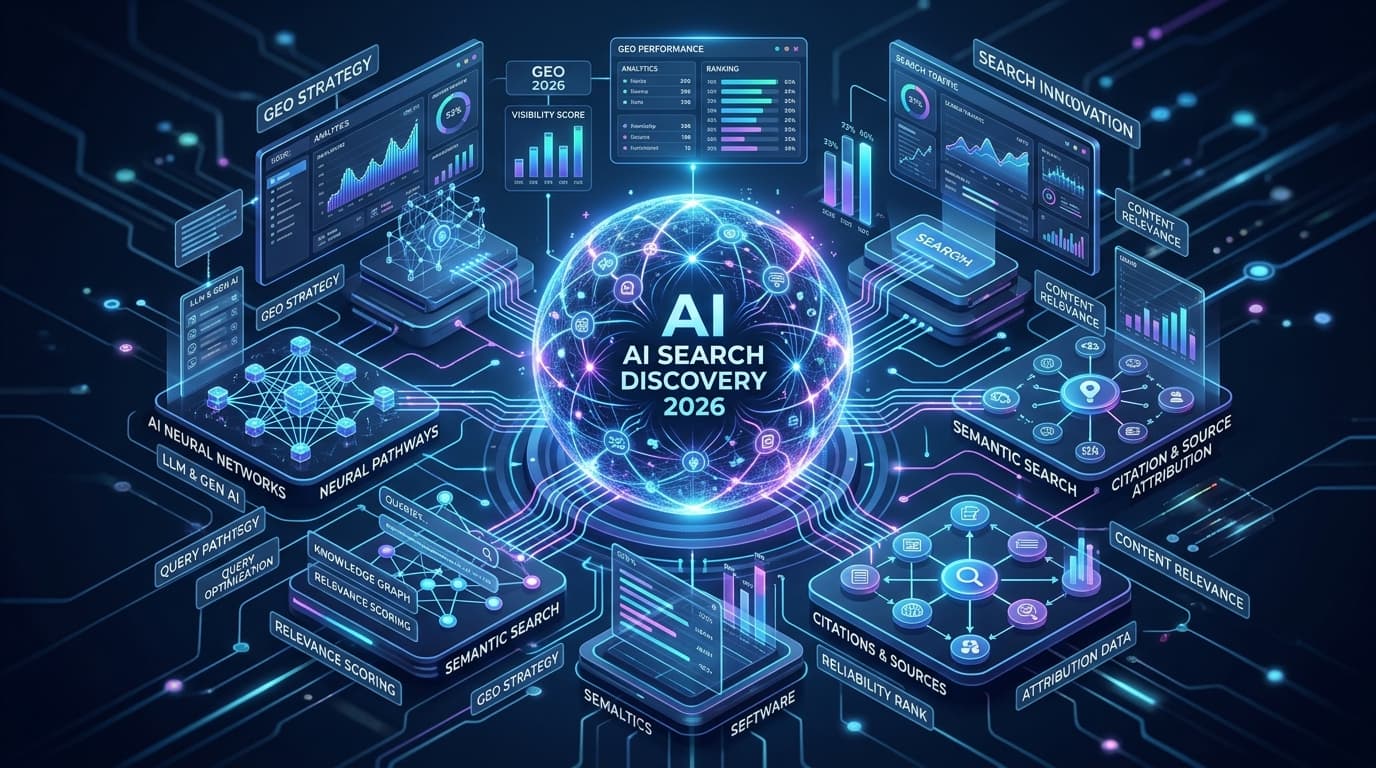
Why Generative Engine Optimization (GEO) Dictates 2026 Revenue
In 2026, user search behavior has undergone the most violent structural shift since the introduction of PageRank in 1998. Buyers no longer click ten blue links to manually compare software vendors, consultancies, or enterprise solutions. Instead, they prompt ChatGPT, Perplexity, or Claude:
If your website is not engineered for Generative Engine Optimization (GEO), your business simply ceases to exist in the generated answer. This guide outlines the exact framework we use at SoftGen to secure high-visibility citations across all major AI search engines.
Traditional SEO vs. Generative Engine Optimization (GEO)
Traditional SEO treated search engines as indexers matching strings of words. Generative AI engines treat the web as a knowledge repository to synthesize answers.
| Dimension | Traditional SEO (2015-2024) | Generative Engine Optimization (2026+) |
|---|---|---|
| Primary Discovery Channel | Google/Bing 10 Blue Links | ChatGPT, Perplexity, Claude, AI Overviews |
| Optimization Goal | Keywords, Backlinks, Meta Tags | Semantic Entities, Direct Citations, Brand Consensus |
| Search Intent Resolution | Click to website (User browses pages) | Zero-Click synthesis with authoritative sources cited |
| Algorithm Mechanics | PageRank, crawler index, keyword density | RAG retrieval, vector similarity, knowledge graphs |
| Conversion Trigger | Organic rank #1-#3 CTR | Top recommendation in synthesized conversational answers |
| Longevity & Defensibility | Volatile to Google Core Algorithm updates | High defensibility via recognized domain authority & E-E-A-T |
The 4 Technical Pillars of Generative Discovery
To rank inside ChatGPT Search, Claude 3.7 artifacts, and Google AI Overviews, your digital platform must satisfy four distinct engineering criteria:
1. Semantic Entity Clustering
AI search engines do not read keywords; they parse semantic entities and relational knowledge graphs. Structuring your products, services, and technical leadership into unambiguous ontologies ensures LLMs recognize your brand as the canonical solution.
- Schema.org JSON-LD graph nesting
- Entity disambiguation across authoritative web sources
- Topical authority hub-and-spoke content architectures
2. Quotable & Fact-Dense Syntax
LLMs extract concise definitions, statistical evidence, and direct assertions. Content structured with high factual density and clear attribution indices is up to 340% more likely to be retrieved during vector search phases of RAG-driven engines.
- Direct answers in first 40 words of sections
- Verified benchmarks with verifiable methodology
- Clean bulleted data points for instant AI parsing
3. Digital Brand Footprint & Consensus
AI engines cross-reference multiple independent third-party sources (GitHub, LinkedIn, Reddit, industry reports, directories) before trusting a brand. Building authentic brand consensus establishes impenetrable generative authority.
- Third-party citations and press mentions
- Active code repositories and open-source contributions
- Consistent business credentials and operational records
4. Technical Clean-Room Architecture
If AI crawlers (GPTBot, ClaudeBot, PerplexityBot) encounter slow rendering, blocked resources, or unstructured DOM bloat, your content is skipped. Server-side rendering (SSR), clean HTML5 hierarchy, and machine-readable llms.txt files are required.
- Native Next.js SSR with sub-200ms TTFB
- Public machine-readable /llms.txt manifests
- Unrestricted semantic crawler accessibility
The SoftGen 5-Step GEO Execution Roadmap
Transitioning an existing business from conventional organic search to dominant generative AI presence requires methodical architectural execution.
Audit & Baseline Discovery
Evaluate how Perplexity, ChatGPT Search, and Google AI Overviews currently synthesize queries around your industry, competitors, and products.
Entity & Schema Engineering
Architect nested Schema.org microdata, Organization graphs, Author credentials, and Service schemas so AI bots grasp your authority.
Information-Dense Content Restructure
Transform thin blog posts and marketing jargon into data-backed frameworks, benchmark comparisons, and authoritative guides.
Authoritative Citation Expansion
Cultivate high-trust mentions in verified industry portals, client case studies, and engineering communities that LLMs treat as ground truth.
Continuous Generative Tracking
Monitor your brand share-of-voice across AI engines with specialized GEO analytics to adapt to weekly model checkpoints.
How SoftGen Builds GEO-First Enterprise Software
Most digital marketing agencies attempt GEO with superficial blog tweaks. At SoftGen, we treat GEO as a software engineering and data architecture challenge.
Whether you are launching a modern SaaS application, redesigning an enterprise corporate portal, or expanding across international markets, our dedicated squads ensure your digital presence is built to dominate generative search in 2026 and beyond.
GEO Implementation Questions Answered
What is the difference between SEO and GEO?
Traditional SEO optimizes websites to rank higher on search engine results pages (SERPs) for specific keywords. GEO (Generative Engine Optimization) optimizes content, code, and authority so that generative AI engines (like ChatGPT Search, Perplexity AI, Claude, and Google AI Overviews) extract, summarize, and cite your brand as the definitive recommendation in conversational answers.
How does ChatGPT or Perplexity decide which businesses to recommend?
Generative search engines utilize Retrieval-Augmented Generation (RAG). When a user submits a prompt, the engine performs high-speed semantic vector searches across crawled web indices, evaluates source credibility (E-E-A-T signals, third-party consensus, and structured entity graphs), and cites the top 2-4 most authoritative, factual sources in the final generated response.
What is an llms.txt file and do I need one in 2026?
Yes. An /llms.txt file is a markdown file placed at the root of your domain (similar to robots.txt) that provides LLM crawlers with a clean, structured overview of your company, key offerings, documentation, and contact information without requiring the crawler to parse heavy web layout bloat.
Will GEO replace traditional SEO completely?
GEO does not replace SEO; it is the natural evolution of modern search. Technical SEO fundamentals (fast load times, mobile responsiveness, clean URLs, semantic HTML) remain the bedrock upon which AI crawlers discover and index your pages.
How does SoftGen implement GEO for client web applications?
Every custom web application and SaaS platform built by SoftGen includes built-in semantic JSON-LD entity graphs, server-side rendered performance architectures, optimized /llms.txt and sitemap configurations, and content structures calibrated for AI citation retrieval.
Ready to Dominate AI Search?
Get a Comprehensive Generative Engine Optimization (GEO) Audit
Discover how ChatGPT, Perplexity, and Google AI Overviews currently perceive your brand. SoftGen provides in-depth technical audits and engineering roadmaps to position your business as the authoritative answer in your market.