Common Mistakes WhenBuilding Software
15 Costly Mistakes That Can Delay, Overbudget, or Even Destroy Your Software Project
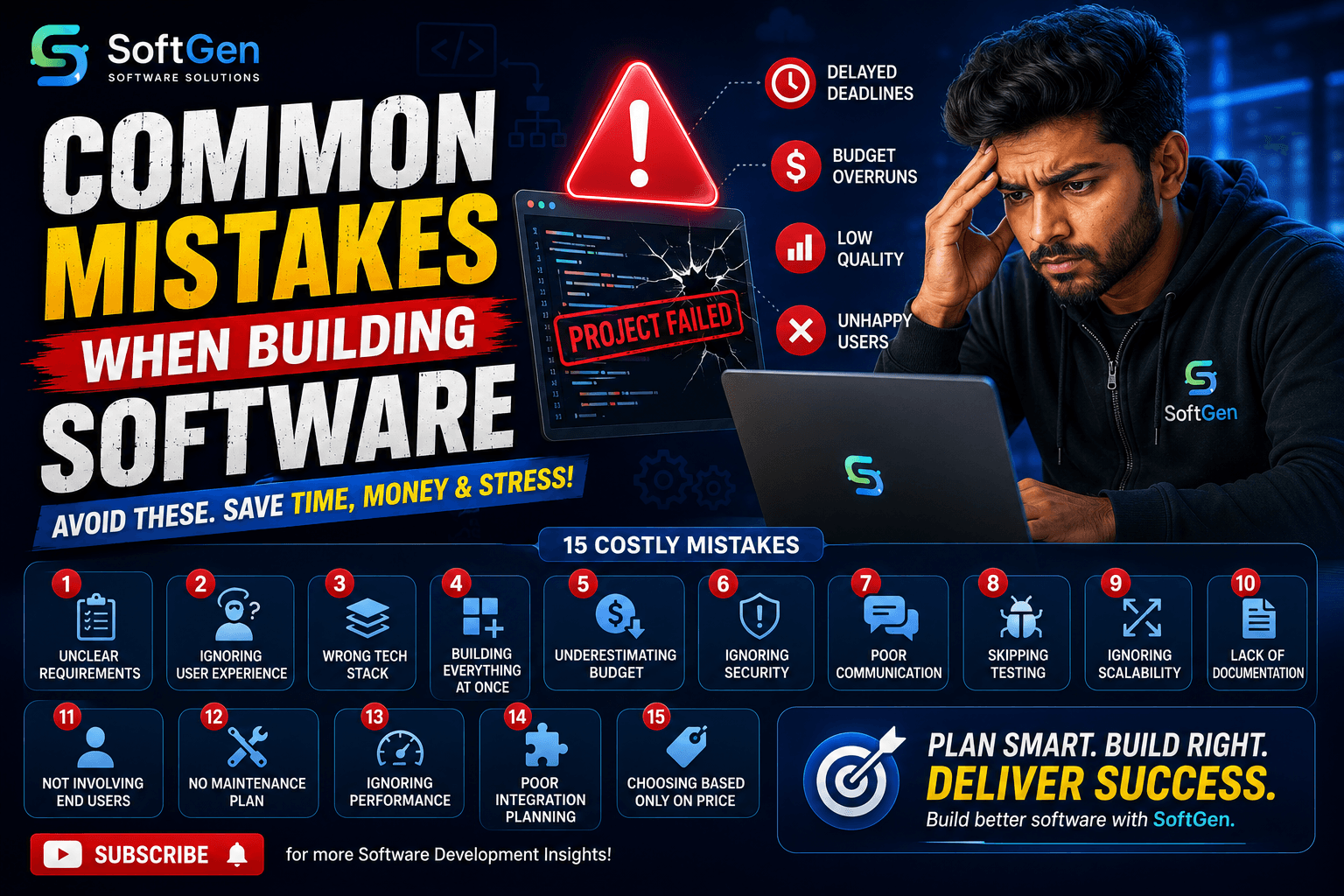
Why Software Projects Fail
Building software is one of the most valuable investments a business can make - but it's also one of the easiest projects to get wrong.
Every year, thousands of software projects exceed their budgets, miss deadlines, or fail to meet business expectations. In many cases, the problem isn't poor programming. Instead, it's poor planning, unclear communication, unrealistic expectations, or weak project management.
Software projects rarely fail because of a single issue. Instead, failure usually results from several small mistakes that accumulate over time:
Free Software Project Health Check
Is Your Project on the Right Track?
Tell us about your project, and our engineering team will review your approach, identify potential risks, and provide actionable recommendations - completely free, with no obligation.
The 15 Most Common Software Development Mistakes
Starting Without Clear Requirements
Many projects begin with only a rough idea. Without documented requirements, developers and stakeholders often have different expectations. Always define business goals, user requirements, features, user roles, and success criteria before development begins.
Ignoring User Experience (UX)
Great software isn't just functional - it must also be easy to use. Complicated interfaces often lead to low adoption, user frustration, increased support requests, and reduced productivity.
Choosing the Wrong Technology Stack
Selecting technologies based on popularity instead of business needs can create long-term problems. Consider scalability, performance, security, team expertise, and integration requirements.
Trying to Build Everything at Once
Many businesses try to launch with every possible feature. This often results in delays, budget overruns, and higher risk. Start with an MVP and expand based on user feedback.
Underestimating the Budget
Development is only one part of the total cost. Don't forget to budget for UI/UX design, testing, cloud hosting, security, maintenance, and third-party services.
Ignoring Security
Security should never be added at the end of a project. Protect your application with RBAC, MFA, secure APIs, data encryption, audit logs, and regular security testing.
Poor Communication
Miscommunication between clients and developers often causes delays. Successful projects rely on regular meetings, sprint reviews, progress reports, and fast feedback.
Skipping Testing
Releasing software without proper testing creates expensive problems. Testing should include functional, performance, security, mobile, browser, and user acceptance testing.
Ignoring Scalability
Your software should support future growth. Plan for more users, additional features, multiple branches, API integrations, and cloud scaling.
Lack of Documentation
Documentation makes software easier to maintain. Important documents include requirements, architecture, API documentation, deployment guides, and user manuals.
Not Involving End Users
Many businesses build software without gathering feedback from the people who will actually use it. Regular user feedback helps identify missing features and usability issues.
No Long-Term Maintenance Plan
Launching software is not the end of the project. Software requires security updates, bug fixes, performance optimization, feature improvements, and infrastructure monitoring.
Ignoring Performance
Users expect fast software. Poor performance can lead to higher bounce rates, lost customers, lower productivity, and increased infrastructure costs.
Poor Integration Planning
Modern businesses rely on multiple systems. Your software may need to connect with CRM, ERP, payment gateways, email platforms, cloud storage, AI services, and external APIs.
Choosing the Cheapest Development Option
Selecting a development partner based only on price often results in poor code quality, security issues, missed deadlines, and expensive rebuilds.
Best Practices for Successful Software Projects
- Clear project planning
- Agile development
- Continuous communication
- Strong documentation
- Security-first architecture
- Regular testing
- Scalable design
- Continuous improvement
How SoftGen Helps Businesses Avoid These Mistakes
At SoftGen, every project follows a structured engineering process designed to minimize risks and maximize long-term success.
Final Thoughts
Building successful software isn't just about writing code - it's about making the right decisions at every stage of the project.
By avoiding common mistakes such as poor planning, weak communication, inadequate testing, and ignoring scalability, businesses can reduce risks and build software that delivers lasting value.
The right development partner, a clear roadmap, and a focus on continuous improvement are the foundations of every successful software project.
Frequently Asked Questions
Why do software projects fail?
Most projects fail because of poor planning, unclear requirements, inadequate communication, lack of testing, and unrealistic expectations rather than coding issues alone.
What is the biggest mistake businesses make?
Starting development without clearly defining business requirements and project goals is one of the most common and costly mistakes.
Can these mistakes be avoided?
Yes. Following a structured software development process, involving stakeholders, prioritizing security, and adopting Agile practices significantly reduce project risks.
How does SoftGen reduce project risks?
SoftGen follows a proven development methodology that includes discovery workshops, architecture planning, Agile delivery, continuous testing, security reviews, and long-term maintenance.
Ready to Build Software the Right Way?
Let's discuss your project
Whether you're launching a startup, modernizing an existing platform, or developing an enterprise solution, SoftGen helps businesses avoid costly mistakes by delivering secure, scalable, and future-ready software.