Choosing the RightTech Stack
How to Select the Best Technologies for a Scalable and Future-Ready Software Project
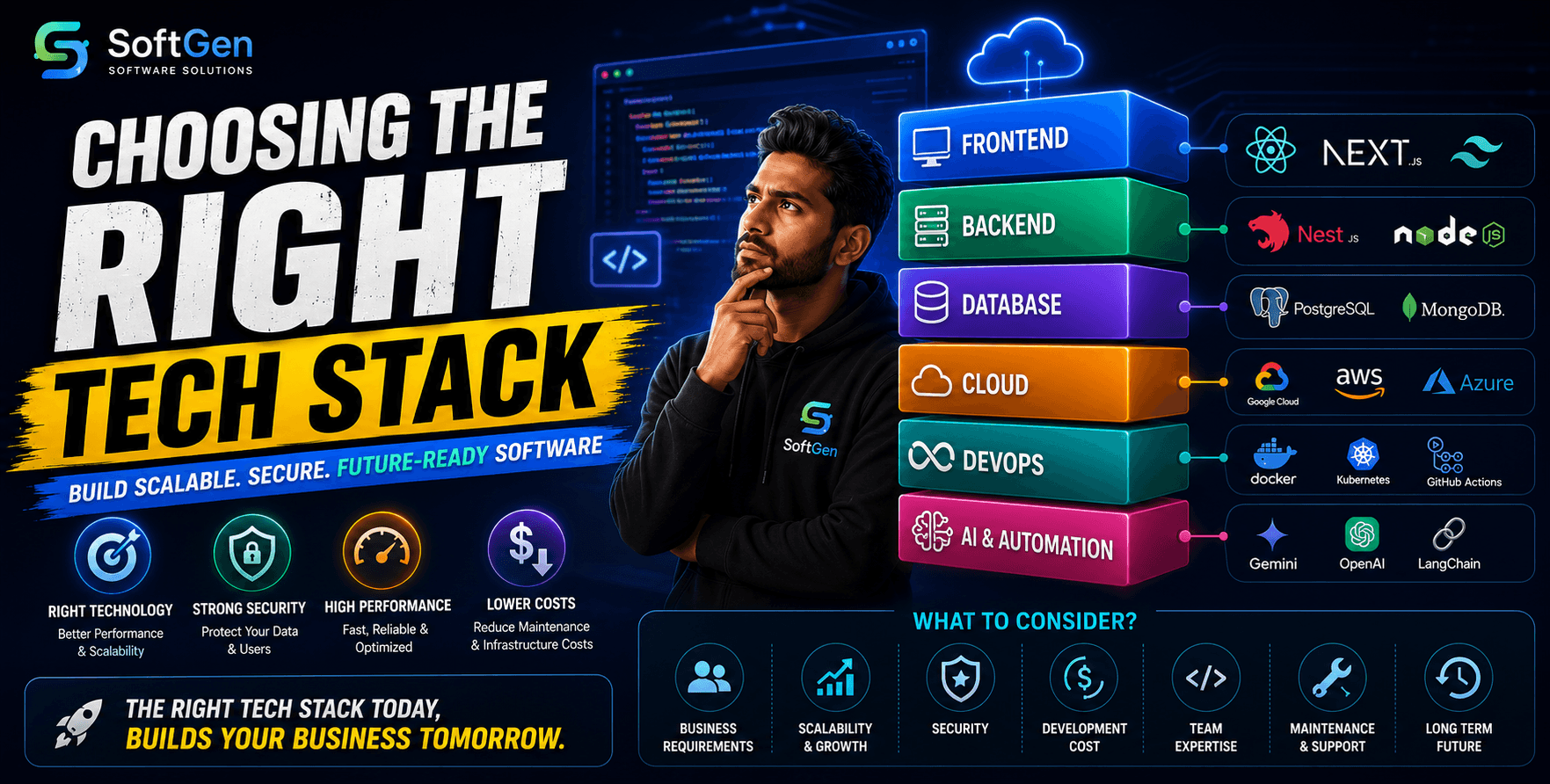
Every Successful Software Starts With the Right Stack
Every successful software product starts with one important decision: choosing the right technology stack.
Whether you are building a SaaS platform, enterprise application, AI solution, mobile app, or e-commerce system, the technologies you choose will directly impact performance, scalability, security, development speed, maintenance costs, and future growth.
Many businesses make the mistake of selecting technologies based on trends rather than business requirements.
The best technology stack is not necessarily the newest one - it is the one that best fits your project goals.
In this guide, we will explain how professional software engineering teams evaluate and choose the right technology stack for modern applications.
What Is a Tech Stack?
A tech stack is the collection of technologies used to build and operate a software application.
What users interact with - the client-side interface
Business logic, APIs, authentication, and integrations
Data storage, retrieval, and management
Hosting, scaling, and global deployment
CI/CD, containerization, and deployment automation
Intelligent features and context-aware applications
Authentication, authorization, encryption, and compliance
Payment gateways, email, analytics, and external APIs
Together, these components power the complete application.
Why Choosing the Right Tech Stack Matters
The wrong technology decisions can lead to serious problems that are expensive to fix later.
Free Technology Consultation
Not Sure Which Technologies to Choose?
Our engineering team will evaluate your project requirements, budget, and goals and recommend the optimal technology stack - completely free, with no obligation.
Step 1: Understand Your Business Requirements
Before selecting technologies, answer these fundamental questions about your project.
Business requirements should always drive technology decisions.
Step 2: Choose the Right Frontend
The frontend is what users interact with. Modern frontend technologies include:
React
Enterprise applications, SaaS platforms, Dashboards
Next.js
SEO-friendly websites, Enterprise portals, AI applications, High-performance web apps
React Native
Cross-platform mobile apps, Android, iOS
Flutter
High-performance mobile apps, Beautiful UI, Multi-platform development
Step 3: Choose the Backend
The backend handles business logic, APIs, authentication, and integrations.
NestJS
Enterprise systems, AI platforms, Microservices, Scalable APIs
Node.js
Real-time applications, SaaS products, APIs, Chat systems
Java Spring Boot
Banking, Government, Large enterprise systems
.NET
Enterprise software, Microsoft ecosystems, Internal business platforms
Step 4: Select the Right Database
Different applications require different databases.
PostgreSQL
Enterprise software, Financial systems, ERP, CRM, SaaS platforms
MongoDB
Flexible document storage, AI applications, Rapid development
Redis
Caching, Sessions, Queues, High-speed processing
Often, enterprise systems use multiple databases together.
Step 5: Cloud Infrastructure
Modern applications are built for the cloud. Popular cloud platforms include:
Google Cloud Platform (GCP)
- Scalability
- Auto-scaling
- AI/ML services
- Global deployment
Amazon Web Services (AWS)
- Broadest service range
- Enterprise adoption
- Global infrastructure
- Comprehensive tools
Microsoft Azure
- Microsoft ecosystem
- Enterprise integration
- Hybrid cloud
- .NET optimization
Step 6: DevOps and Deployment
Reliable deployment is essential. Common DevOps tools include:
These tools enable faster and safer software releases.
Step 7: AI and Automation Technologies
If your application includes Artificial Intelligence, consider these technologies:
These technologies help build intelligent, context-aware applications.
Step 8: Security Considerations
Technology choices should support strong security. Important features include:
Security should never be compromised for convenience.
Common Tech Stack Examples
Enterprise SaaS
AI Platform
E-Commerce Platform
Mobile Application
Common Tech Stack Mistakes
Many projects fail because teams make these critical technology decisions.
- ×Following technology trends blindly without evaluating fit
- ×Ignoring scalability requirements for future growth
- ×Choosing unfamiliar frameworks the team cannot maintain
- ×Underestimating ongoing maintenance and operational costs
- ×Skipping security planning until after development
- ×Ignoring cloud architecture and deployment strategy
Technology decisions should always support long-term business goals.
How SoftGen Chooses a Tech Stack
At SoftGen, we never recommend a one-size-fits-all solution. Instead, we evaluate:
Every project receives a technology stack designed specifically for its objectives.
Why Businesses Choose SoftGen
We help organizations build software using proven, enterprise-grade technologies.
We focus on technologies that remain scalable, secure, and maintainable as your business grows.
Final Thoughts
Choosing the right technology stack is one of the most important decisions in any software project.
A well-planned stack improves performance, security, scalability, and long-term maintainability while reducing technical debt and operational costs.
Instead of chasing trends, choose technologies that align with your business goals and future growth.
With the right architecture and engineering expertise, your software can remain reliable and competitive for years to come.
Frequently Asked Questions
What is a tech stack?
A tech stack is the combination of technologies used to build a software application, including the frontend, backend, database, cloud infrastructure, APIs, and supporting tools.
Should startups always use the latest technologies?
Not necessarily. The best technology stack depends on your business goals, budget, team expertise, scalability requirements, and long-term maintenance strategy.
Can I change my tech stack later?
Yes, but migrating to a different technology stack can be costly and time-consuming. Choosing the right technologies at the beginning helps avoid unnecessary redevelopment.
Which tech stack does SoftGen recommend?
Every project is different. At SoftGen, we evaluate each client's requirements and recommend technologies that best match their business objectives, scalability needs, and security requirements.
Ready to Build Your Next Software Project?
Let's choose the right tech stack together
Whether you are developing a SaaS platform, AI-powered application, enterprise portal, or mobile app, SoftGen can help you choose the right technology stack and build secure, scalable software designed for long-term success.